Existing wiring first
We review the available switches, sockets and distribution board before recommending compatible controls.
Most smart-home advice assumes spare rooms, new wiring and a generous kitchen. Lotus Smart Living Pte Ltd plans HDB smart home Singapore installations around your actual floor plan, existing electrical setup and the way your household moves through the day.
Choose the practical upgrades first: lighting, door access, kitchen safety, appliance control, energy use and indoor air sensing. No sprawling system required.
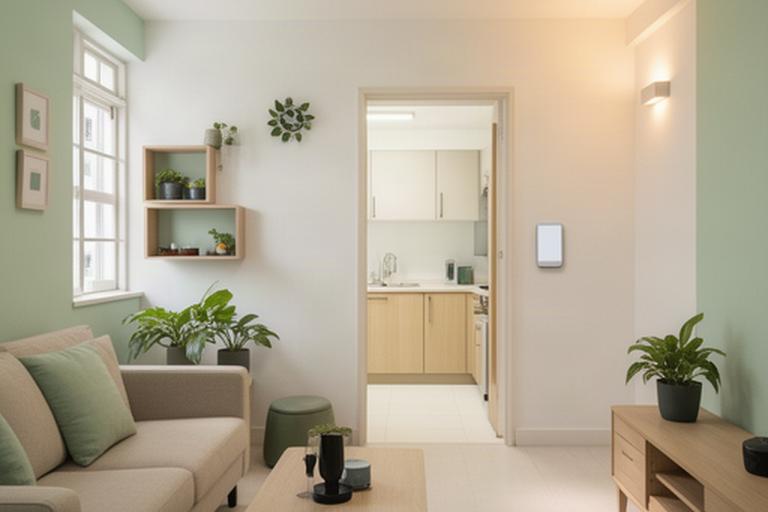
Device positions depend on wall construction, available power points and your household's routines.
Start with the moments that matter in each space. A compact layout needs careful device placement, especially where walls are shared and power points are limited.
Set the common area up for shared routines, movie time or a quieter evening.
See package optionsPrioritise clear alerts and suitable control for appliances used every day.
See package optionsUse suitable sensors and schedules in a humid, utility-focused space.
See package optionsMake the front door easier to manage for residents and trusted visitors.
See package optionsA compact kitchen leaves little room for misplaced sensors or extra controls. We plan alerts and appliance settings around your cooker, counter space and usual cooking routine.
This graphic is illustrative, not a reading from your home. Actual use depends on your appliances, household routines and metering setup.
Useful HDB energy management starts with the appliances that draw the most power in your home. Your household's own readings are more helpful than a generic comparison.
Smart plugs and compatible metering can show patterns for suitable high-use appliances. We check load limits before recommending a device.
Set operating times around when bedrooms or living spaces are used. Keep manual control available for changes in routine.
Smart distribution board integration is considered only after checking the board, circuit scope and electrical safety requirements. Licensed electrical work stays with qualified professionals.
Reports help you compare your usage over time and spot schedules worth adjusting. They don't promise a fixed bill reduction.
Older wiring and rental terms call for a careful scope, not a standardised device list. We check what can be mounted or connected without unnecessary changes to the flat.
We review the available switches, sockets and distribution board before recommending compatible controls.
For tenants, removable mounts and plug-in devices can reduce changes to walls and fittings.
If electrical work is needed, we can coordinate the system scope with your preferred qualified contractor.
We don't make unauthorised changes to building infrastructure or shared property systems.
Closed windows, air-conditioning and seasonal haze can change how a flat feels indoors. Put simple sensing and lighting controls where they can help, and keep the manual option close.
Set a soft night-time route between the bedroom and bathroom, with brighter lighting available when needed. Smart lighting seniors can use should stay easy to switch on by hand.
Air-quality sensing can help you notice changes during haze periods or in rooms that stay air-conditioned with windows closed.
Begin with one room if you have a specific need. Expand the setup when it makes sense for your household.
Suitable for a first step such as bedroom night lighting, an entry alert or control of selected appliances.
For households planning lighting, air-conditioning schedules and appliance controls across the main rooms.
Pairs straightforward controls with night lighting, household alerts and carefully selected safety measures.
Tell us your flat type, whether you own or rent, and the rooms you want to improve. We'll discuss a suitable assessment and a practical scope.